part-time volunteers were originally authorized
The Territorial Army was designed at scale from the start. This page asks a simple question: why would a new nation build a reserve force of civilians instead of relying only on a full-time army?
You'll trace the TA's legal creation, citizen-soldier model, recruitment pipeline, training system, and organizational structure, then test your understanding in a scored assessment.
Why this mattersThe TA shows how defense planning can distribute readiness across society without pulling every trained person out of civilian life full-time.
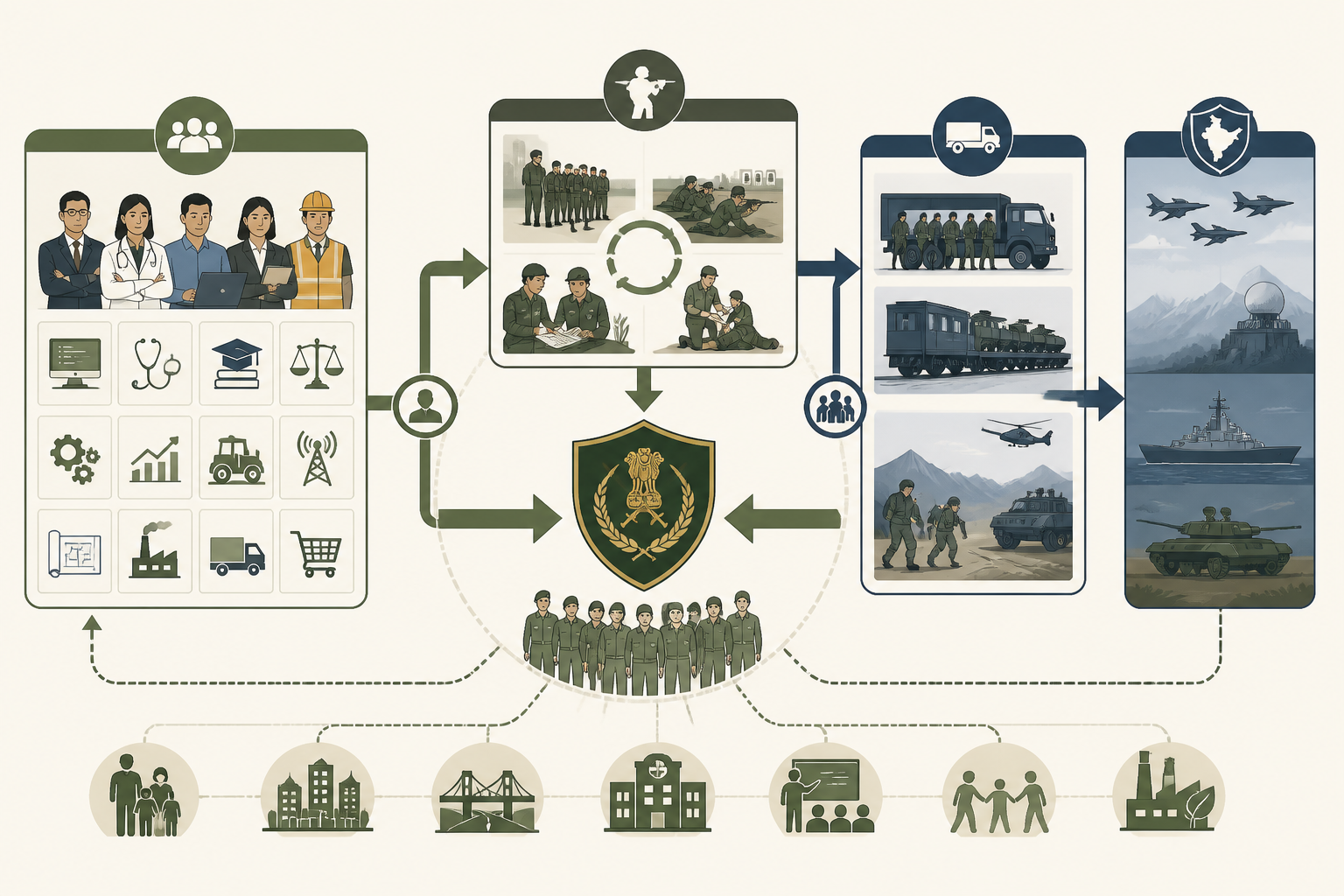
Why create a part-time military force?
After independence, India needed a force that could relieve the Regular Army of static duties, support coastal and anti-aircraft defense, and provide field formations when required. A reserve built from civilians made that possible without maintaining every capability on full-time footing.
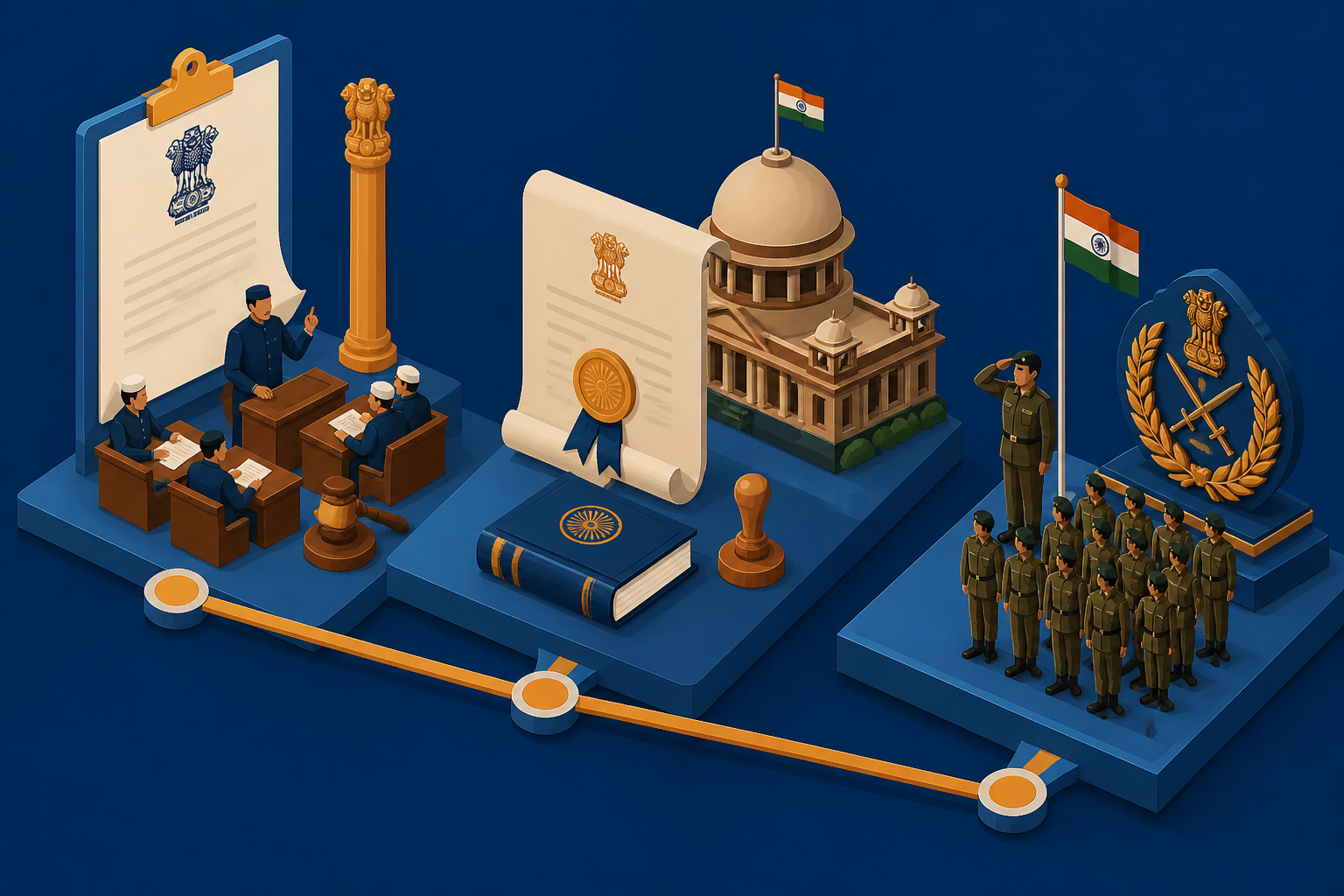
The Territorial Army is a citizen-soldier system
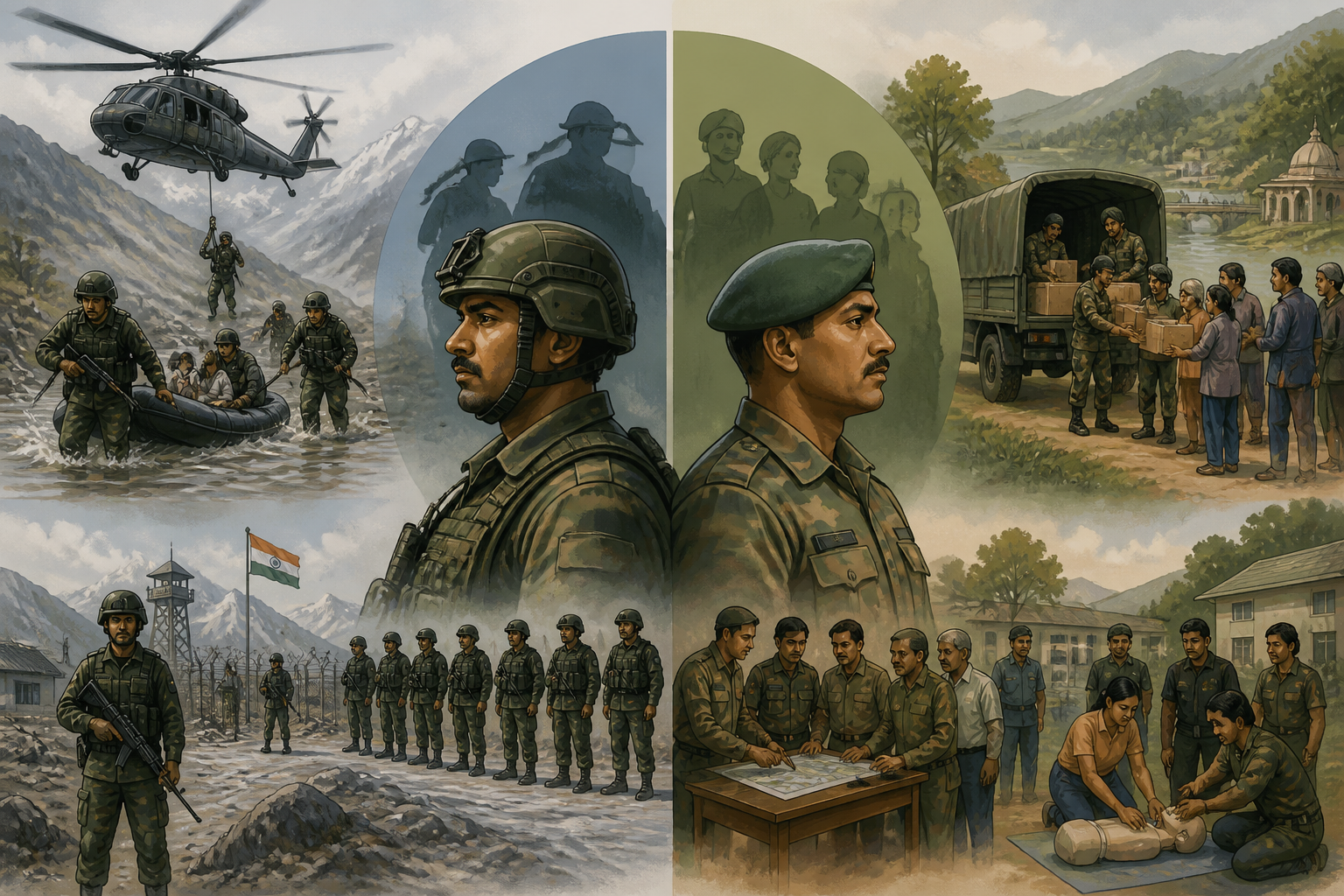
It is a part-time military force integrated into the Indian Army. Volunteers keep their civilian professions, train in recurring cycles, and become liable for active duty during national emergencies, support to civil power, training embodiment, or attachment to regular forces.
The legal framework also protects reinstatement in civilian employment after service, which is central to the model.
Think of the TA as a bridge, not a separate army
The TA connects three domains: civilian skills, periodic training, and emergency service. Understanding that bridge explains why the force can strengthen national defense while preserving civilian productivity.
Volunteers bring existing professional experience into the reserve system.
Short, repeated training cycles maintain usable military competence.
When needed, the state can mobilize trained citizens for defined duties.
Fill the blank
The Territorial Army allows volunteers to remain in their civilian professions while maintaining military _____ through periodic training and legal liability for service.
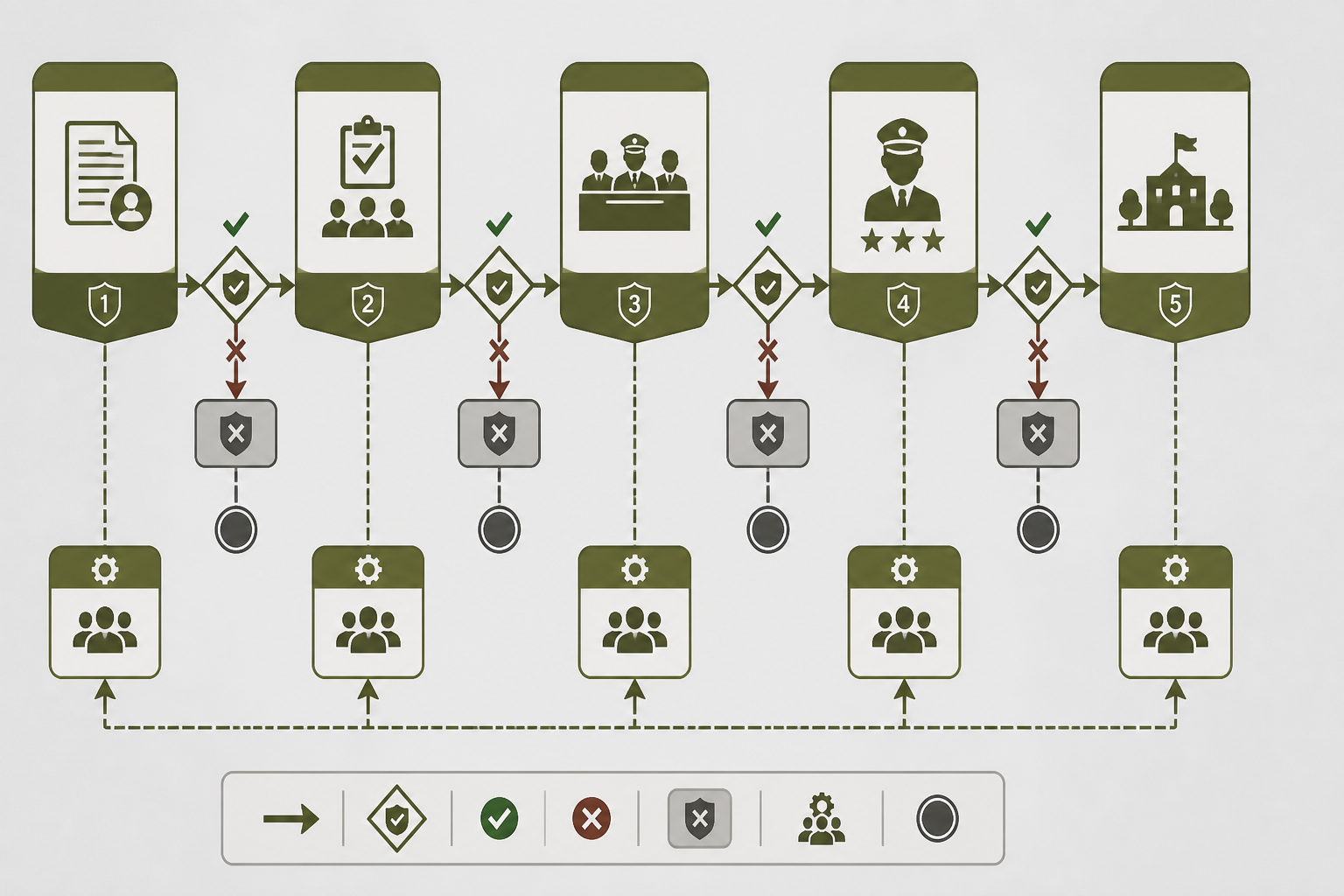
Selection filters for different kinds of readiness
For non-departmental officer entry, the chapter describes a staged path: preliminary screening, written papers in English and General Ability with 50 percent qualifying marks, interview, SSB assessment, and final unit allotment.
Training is short, but not casual
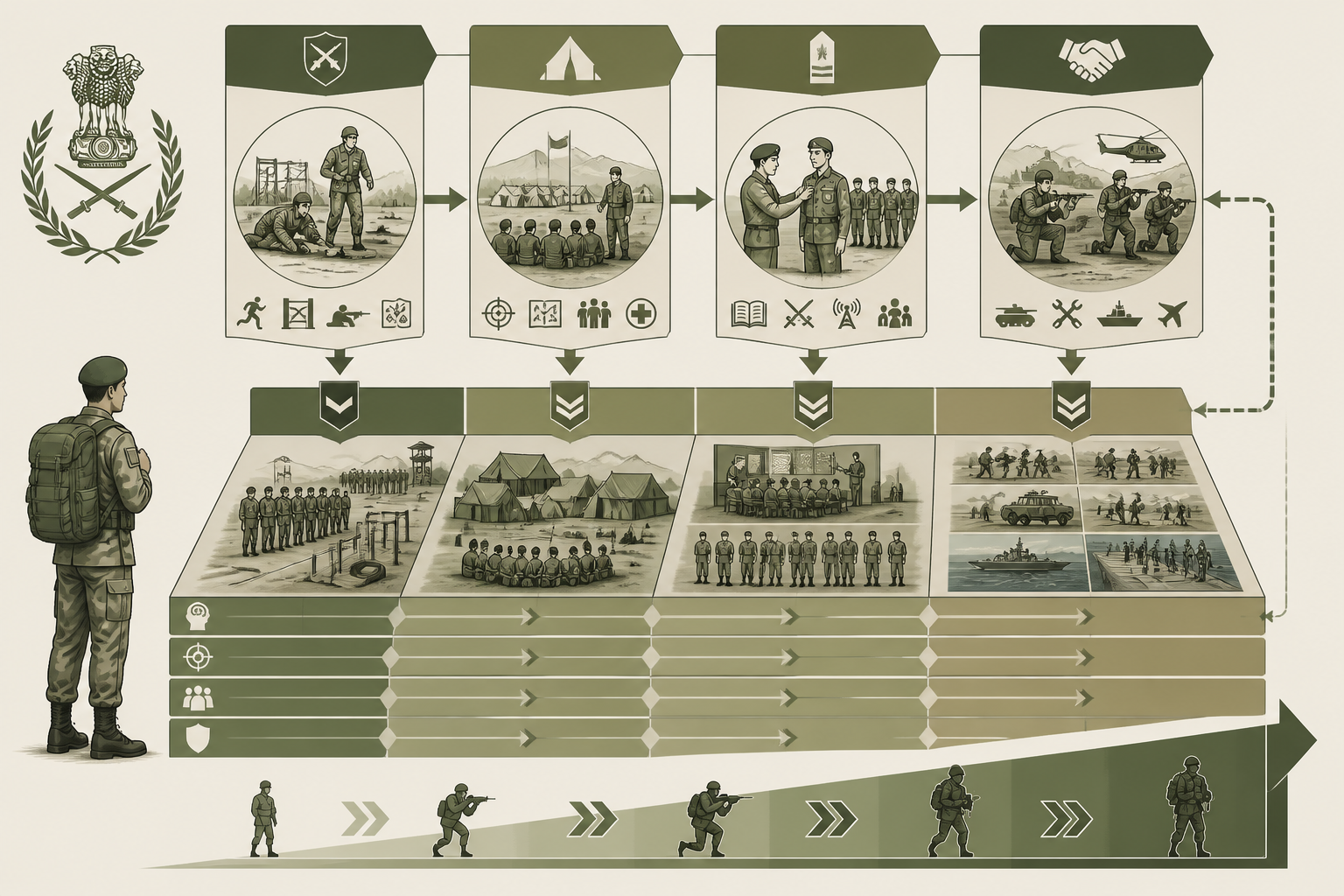
The TA does not train every day like the Regular Army, but it is also not an occasional club. The chapter describes a structured sequence: basic unit training, annual camp, and longer officer instruction phases that can extend to 90 days.
Put the stages in the correct order
130,000
Planned scale showed that reserve capacity was meant to be nationally significant.
174
Expansion was rapid before later wars led to conversions and disbandments.
40,000
The modern TA is smaller, but still structured for support, relief, and resilience roles.
Why scale still matters
The TA's value is not measured only by size. It matters because it can free regular forces for frontline duties while supporting essential services and civil authorities during crises.
Match the concept to its meaning
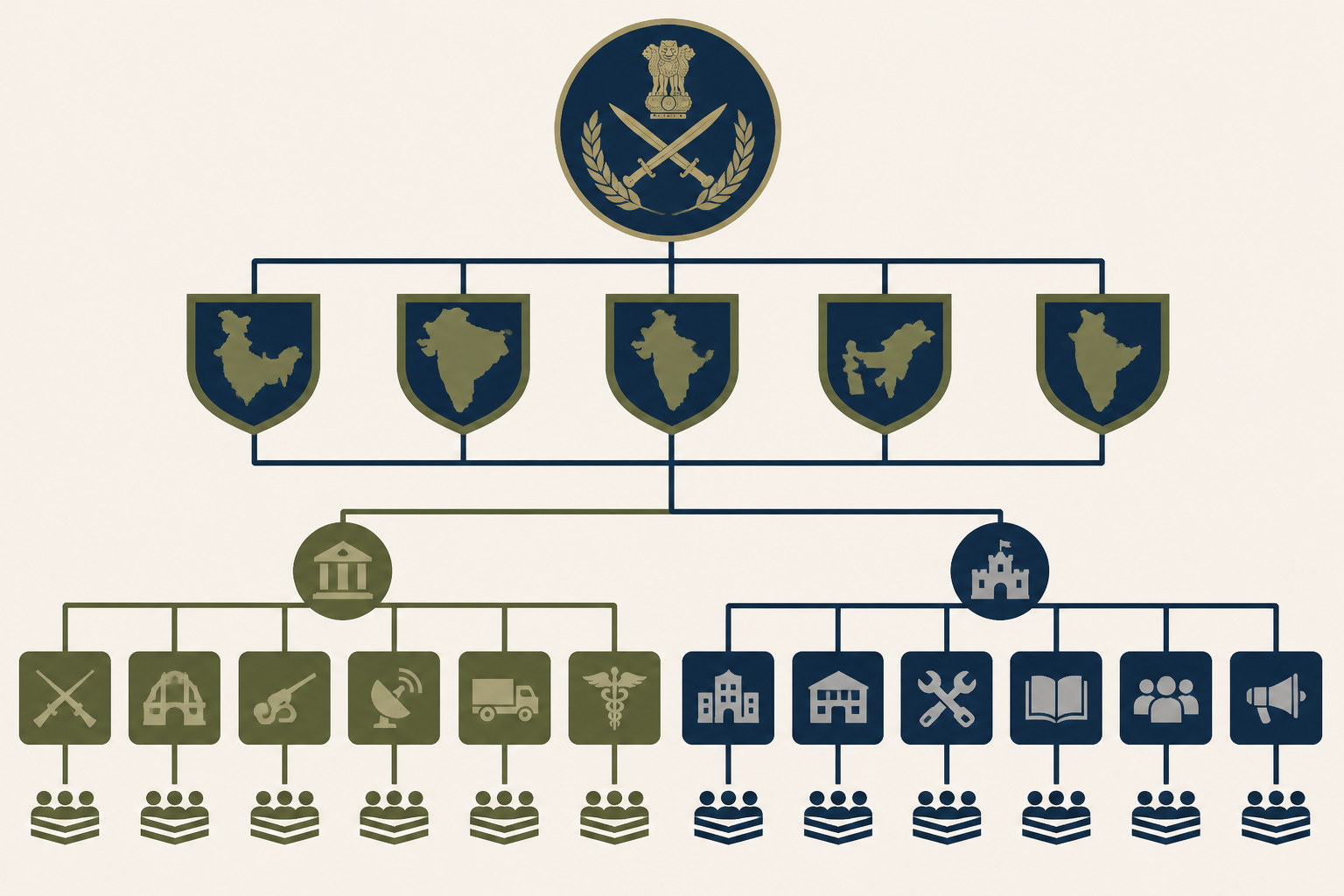
Structure makes coordination possible
The chapter places the Directorate General of TA at Army Headquarters, supported by five group headquarters aligned to Eastern, Western, Northern, Southern, and Central Commands. This arrangement helps align administration with geography and military command.
Compare departmental and non-departmental pathways
Use the chapter's categories to reason about how the TA recruits and deploys people. Non-departmental units include infantry and engineer functions. Departmental units align with sectors such as ecology, railways, and oil.
As you flip each card, decide whether the example strengthens direct military capability or protects an essential national service. That contrast is the page's central classification activity.
Infantry, engineers
Railways, oil, ecology
Mistake to avoid: treating the TA like a lesser copy of the Regular Army
The chapter presents the TA as different by design. Its advantage lies in selective embodiment, limited recurring training, and links to civilian sectors. If you judge it only by full-time army standards, you miss the strategic logic of reserve integration.
Hotspot review
Which part of the structure mainly aligns the TA with different Army commands across India?
One system, four linked functions
- Legal: legislation defines authority, liability, and protection.
- Social: civilians stay in everyday professions.
- Operational: the TA relieves the Regular Army and supports emergencies.
- Administrative: headquarters and unit categories coordinate service.
Together, these explain why the TA is best understood as an integration mechanism between society and defense.
From establishment to later evolution
This chapter ends with the TA in its modern support role. A useful next step would be to explore how later wars, reorganizations, and sector-specific units reshaped its size and composition over time.
Before the assessment, review the summary page to consolidate the legal, organizational, and operational logic you have just built.
Summary before assessment
Check your understanding
You are about to answer five scored questions. Each question has exactly four options. You will not see per-question correctness feedback, only your final score at the end.
- Read each question carefully.
- Select one answer for each item.
- The Next button unlocks only after you answer the current assessment question.
- You need 80% or higher to pass and generate your certificate.
Your lesson score
Complete the assessment to see your score.